
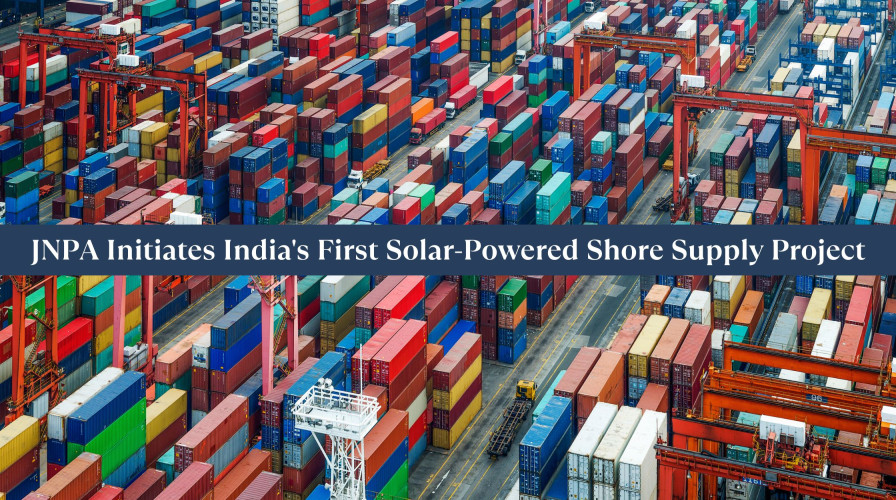
JNPA Initiates India's First Solar-Powered Shore Supply Project to Reduce Fuel Consumption and Air Pollution
In a groundbreaking move towards sustainable port operations, the Jawaharlal Nehru Port Authority (JNPA) is set to launch India's first solar-powered pilot project aimed at providing shore power to berthed ships. This ambitious initiative, with an investment of approximately ₹100 crore, seeks to drastically reduce fuel consumption and mitigate air pollution at one of the country’s busiest ports.
A Revolutionary Step in Port Operations
The project, expected to be operational within the next 18 months, represents a joint venture between JNPA, Turtas APM Terminals, and the Container Corporation of India Limited. It will serve as a test bed for a larger plan to introduce shore power across all terminals at JNPA, which handles six private ports capable of accommodating up to 30 cargo ships simultaneously. These ships, often berthed for extended periods while handling container cargo, currently rely on diesel-powered generators to run essential services such as hoteling, loading, and unloading.
Significant Environmental and Economic Benefits
Typically, ships use high-capacity generators ranging from 1,000 to 25,000 KVA, consuming anywhere between 6,000 to 9,000 liters of diesel over a 24 to 48-hour period. This not only results in substantial fuel costs—ranging from ₹6 lakh to ₹9 lakh per ship—but also contributes significantly to air pollution. The new solar-powered shore supply system aims to eliminate the need for these diesel generators, thereby reducing both operational costs and harmful emissions.
Challenges and Future Prospects
While the project promises considerable environmental and economic benefits, it comes with its own set of challenges. The high cost of implementation has been a deterrent for similar initiatives globally. However, JNPA is optimistic that this pilot project will pave the way for widespread adoption, not only at JNPA but across other ports in India.
Chief Manager of JNPA's Mechanical and Electrical Engineering (M&EE) Department, Nitin Borwankar, acknowledged the project's global rarity due to its cost but emphasized its necessity in the face of rising fuel prices and escalating environmental concerns. JNPA President Unmesh Wagh also highlighted the long-term vision of supplying shore power to all ships from the national grid, which would require a total of 74 MW of electricity and an estimated ₹600 crore investment.
A Model for Sustainable Port Development
As the first of its kind in India, JNPA's solar-powered shore supply project is poised to set a new standard for sustainable port operations in the country. If successful, it could serve as a model for other ports seeking to balance economic growth with environmental responsibility.
Related Tag :